Unwanted Traits, Recessive Surprises, and the Genetic Tools Every Serious Breeder Must Master
Every breeder eventually faces it, that moment when a hidden flaw suddenly appears in a line you’ve spent years refining. Is it a throwback? Bad luck? A hidden recessive? Or a deeper genetic issue waiting to surface?
In this episode, we break down why good strains sometimes reveal bad traits, and more importantly, how to correct those problems without losing the heart of your bloodline. You’ll learn how recessive genes operate, why purity creates predictability, and how disciplined selection can transform setbacks into improvements.
We’ll discuss how to identify monogenic vs. polygenic traits, why adding outside blood almost always makes things worse, and how to rebuild your strain from one cock and one hen, your Adam and Eve. Whether you’re breeding chickens or gamefowl, for show, performance, or utility, this episode teaches you how to think like a geneticist and breed like a master.
Good strains don’t fall apart, they reveal what’s been hidden all along. Your job is to read the clues, make smart decisions, and refine your line for generations to come.
Make sure to follow and watch our future shows. We plan to dive deep into the world of breeding and genetics, nutrition and health management, and provide essential tips, so you too can create high quality strains. Whether you’re breeding domestic chickens, gamefowl, or various types of livestock, this show is for you.
Watch Bred to Perfection Live
Mondays and Fridays at 6 PM PST / 9 PM EST on YouTube
Join Kenny Troiano and guests as they explore advanced breeding techniques, poultry nutrition, health management, and genetic sustainability—all with one goal: helping you create high-quality, long-lasting strains.
See ya there!
Kenny Troiano
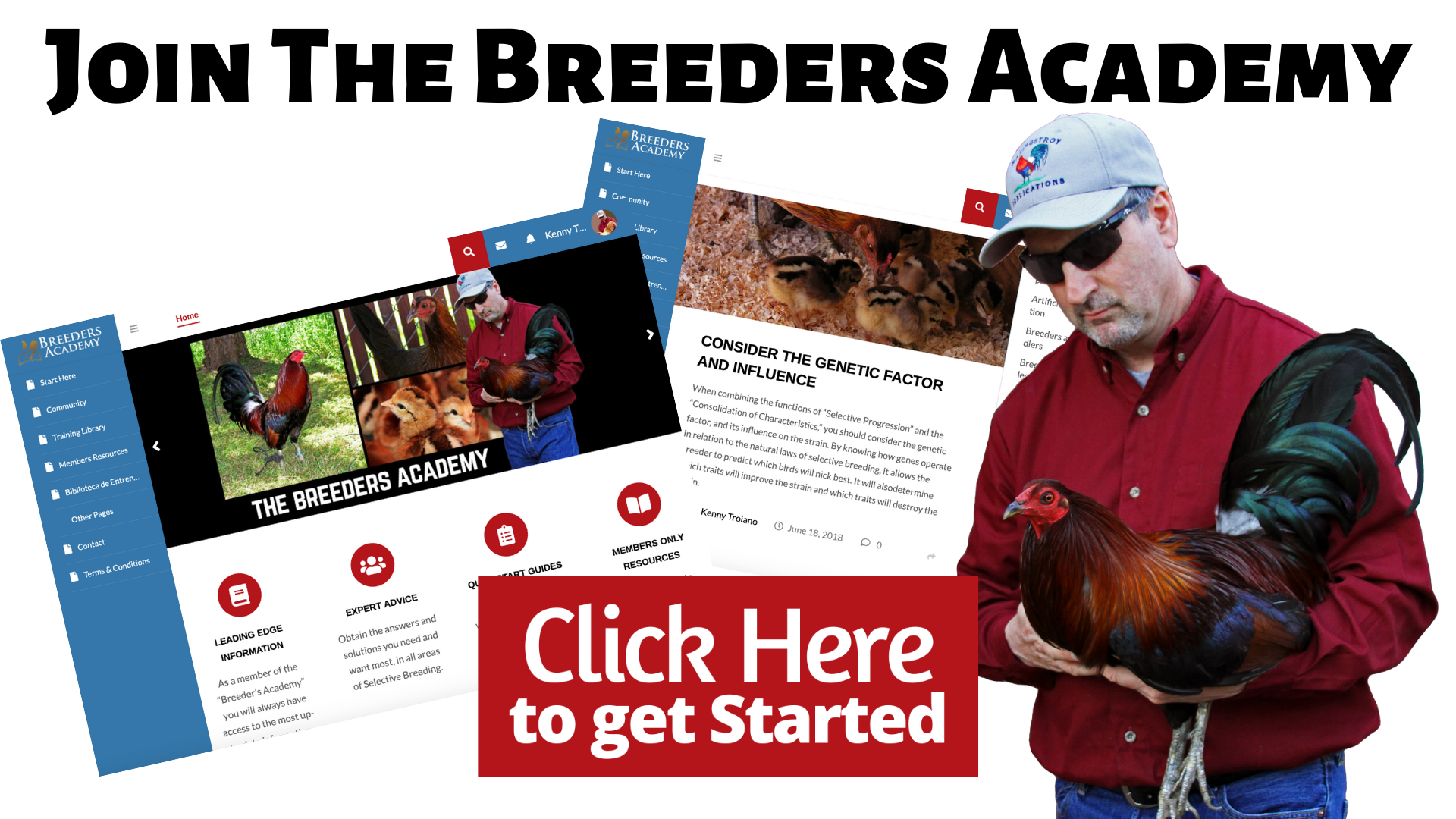
Founder of “The Breeders Academy”
We specialize in breeding, and breeding related topics. This includes proper selection practices and the use of proven breeding programs. It is our mission to provide our followers and members a greater understanding of poultry breeding, poultry genetics, poultry health care and disease prevention, and how to improve the production and performance ability of your fowl.
If you are interested in creating a strain, or improving your established strain, you are in the right place.
We also want to encourage you to join us at the Breeders Academy, where we will not only help you increase your knowledge of breeding and advance your skills as a breeder, but improve the quality and performance of your fowl.
Managing Flaws in Your Bloodline: The Breeder’s Dilemma
In this post, we’ll explore a fascinating phenomenon that can trouble breeders: when good strains go bad. Understanding and tackling hidden flaws in your bloodline requires both strategy and patience. Let’s dive into the core principles discussed by Kenny and Nancy Troiano in their episode of Bred to Perfection.
Episode Highlights
Discussing both the art and science of breeding, Kenny and Nancy emphasize the importance of managing unexpected traits that can appear suddenly within a bloodline. Here, they share their insights on how to handle these unwanted traits and transform potential flaws into an opportunity for improvement.
The Issue of Unexpected Traits
In the world of breeding, it’s not uncommon to see traits emerge that leave breeders baffled. Nancy and Kenny explored the intricacies of dealing with these unexpected characteristics, discussing how these traits might appear suddenly and emphasizing their potential impact on the progress and stability of a bloodline.
The Mystery of Trait Appearance
Kenny explained that traits don’t just appear out of thin air; rather, they are revealed due to the genetic composition of the birds. These traits could be a throwback to something seen generations ago and appear when the right recessive genes are matched. Nancy added that traits do not just mutate or emerge randomly, but are often the consequence of breeding two birds carrying the same recessive gene.
Managing Through Selection
To mitigate unwanted traits, Kenny and Nancy encourage breeders to practice thorough selection and diligent record-keeping. By carefully selecting breeding pairs and maintaining comprehensive records, breeders can trace back and manage recessive traits effectively.
Creating a Pure Family
One of the highlights of the discussion was the quest for purity in bloodlines. Kenny detailed that a family line becomes pure through generational breeding, becoming uniform, consistent, predictable, and repeatable. It’s an intensive process that may take between five to ten years, leading to a genetically pure family that remains true to its intended standards.
Handling Defects and Unwanted Traits
To manage defects effectively, breeders should cull any birds exhibiting undesirable traits. Both Kenny and Nancy stress that tolerating defects, such as crooked toes or breastbones can perpetuate these undesirable traits throughout the bloodline, potentially compromising the quality of the entire strain.
Key Takeaways
- Understand Your Traits: Success begins with understanding the genetic factors of your birds and the traits you’re selecting for or against.
- Strict Selection and Culling: Never tolerate defects. Cull immediately to prevent impure traits from contaminating the bloodline.
- Avoid Outside Blood: Adding new blood to fix flaws often does more harm than good. It changes the family dynamics, introducing unwanted genes.
- Educate Yourself on Genetics: The path to a stable bloodline requires a solid understanding of genetic characteristics and proper breeding techniques.
Final Thoughts
When good strains go bad, staying informed and disciplined in your approach provides consistent success. As Nancy exclaimed, “It can be fixed,” and with careful selection and management, breeders can maintain the integrity and purity of their bloodlines.
Whether you’re a novice or an experienced breeder, the journey is rewarding, although challenging. Delve deeper into genetics, commit to precision in selection, and reap the benefits of a strong, stable strain.
As always, happy breeding!