
In this episode of ‘Bred to Perfection’, Kenny Troiano, founder of the Breeders Academy, and his wife Nancy discuss several challenges faced by both novice and veteran breeders. Kenny shares his observations from a social media post questioning why veteran breeders are not teaching the younger generation. He addresses potential reasons, including the reluctance of both sides to learn from each other and the presence of poor educators. Nancy and Kenny debate these ideas, emphasizing the importance of finding good mentors and maintaining an open mind. They cover best practices for animal husbandry, the drawbacks of relying on faulty advice from social media groups, and the importance of a well-rounded education in genetics, health, and nutrition for improving poultry strains. The episode also touches on the prevalence of misinformation in the community and the role of ‘information peddlers’, concluding with practical advice for selecting healthy breeding stock and identifying qualified experts.
Ep301 – Building Stronger Bloodlines from the Inside Out
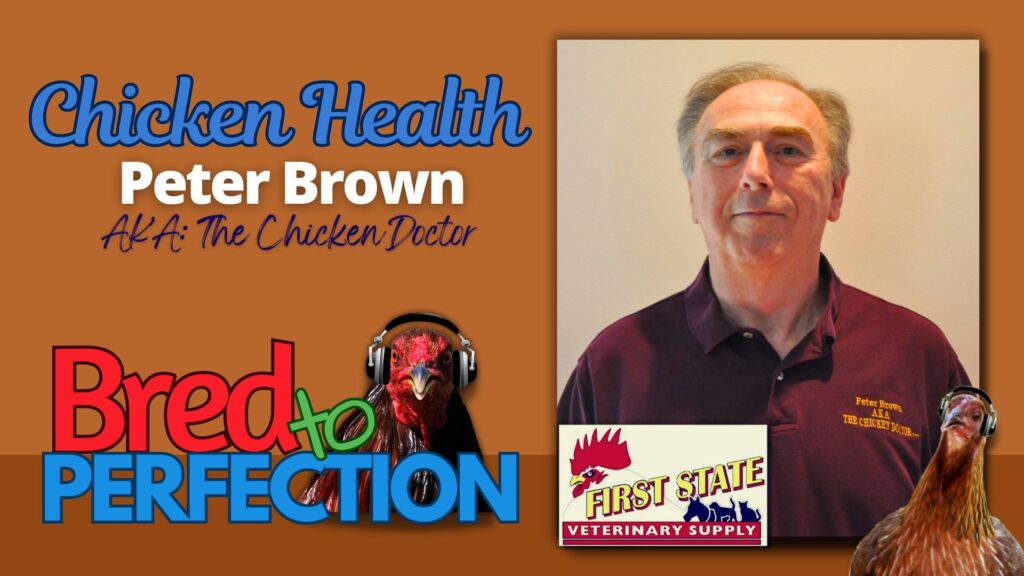
In this episode of ‘Bred to Perfection,’ host Kenny Troiano, founder of the Breeders Academy, and his wife Nancy, chat with Peter Brown about advanced techniques in poultry wound care and breeding practices. The conversation includes a revolutionary healing bandage with micro-batteries that accelerates wound healing and reduces infection risks. They also discuss the critical role of gut health in breeding stronger bloodlines, the effects of diet, water quality, and environmental factors on poultry health, and solutions for common poultry diseases. The episode offers practical insights and recommendations for poultry breeders aiming to improve the resilience and overall health of their strains.
Ep300 – The 3 Laws of Selective Breeding

In this episode of Bred to Perfection, Kenny Troiano and his co-host Nancy discuss why successful breeding requires more than pairing birds or “breeding best of the best,” focusing on three indispensable laws: selective breeding with systematic breeding programs, evolutionary biology, and genetic inheritance. Kenny Troiano explains how studying successful breeders, learning proper selection (conformation, type, temperament, color), and understanding defects and health led him to develop the Founders Program within the Breeders Academy. They contrast artificial selection with natural selection, cover concepts like genetic drift and small populations, and describe practical genetics tools (dominant/recessive, sex-linked, polygenic/quantitative traits, atavistic “throwbacks”). Kenny Troiano emphasizes records, culling, using sublines for specific purposes, avoiding frequent outcrossing, and building a stable foundation line that becomes consistent and predictable.
Ep299 – Tony Saville and the Future of American Games

Kenny Troiano hosts an episode of “Bred to Perfection” with his wife Nancy and guest Tony Saville discuss their long friendship, and how Tony influenced his understanding of gamefowl structure, selection, and preservation onto Kenny. Tony, 82, describes his background in gamefowl judging (including South Africa and the Oxford Old English Game Fowl Club), his American Gamefowl Society, and his concern about unqualified judges and people trying to “improve” breeds away from true type. They criticize efforts to change the breed name to “American Pit Game,” debate comb/type and APA standard inclusion, and strongly oppose allowing “progressive white,” citing a Brian Reeder segment explaining it as harmful, hard to eliminate, and worsening over generations.
Ep298 – The Progressive White Debate: Science vs. Tradition

This episode of Bred to Perfection with Kenny Troiano features a discussion on breeding selection, maintaining true breed type, and the dangers of adding new blood as a shortcut instead of using proper breeding programs. Kenny and Tony highlight long-established, true-breeding gamefowl families and explain how poor selection, not inbreeding depression, often causes shrinking size and declining quality. A major focus is progressive whitening, distinguished from dominant and recessive white, including how it can appear as white in wings or tails, worsen with age, be difficult to eliminate, and weaken birds by affecting melanin-related body functions such as immunity, fertility, egg production, and eggshell quality. They argue standards should not legitimize white faults, and emphasize strict culling and selection to preserve and improve the breed.