Have you ever wondered how we ended up with chickens that lay 300 eggs a year or grow to market weight in just a few weeks? In this episode, we take a deep dive into the science behind chicken breeds and commercial strains, and it’s more than just DNA.
Join us as we explore how evolutionary mechanisms like natural selection, artificial selection, genetic drift, gene flow, and mutation shape the chickens we know today. But we’re going even deeper, into the world of epigenetics, where genes can be switched on or off by the environment, diet, stress, or even selective breeding itself.
We’ll uncover:
- How farmers and scientists use selective breeding to develop broilers and layers
- Why genetic drift and gene flow affect rare and local breeds
- The role of mutations in creating traits like feather type, color, and growth rate
- How epigenetic changes may influence productivity, behavior, and health, without changing a single base of DNA
Whether you’re a poultry enthusiast, breeder, student, or just curious about how science shapes our food systems, this episode is packed with insights on the biology of chicken breeding and evolution.
Make sure to follow and watch our future shows. We plan to dive deep into the world of breeding and genetics, nutrition and health management, and provide essential tips, so you too can create high quality strains. Whether you’re breeding domestic chickens, gamefowl, or various types of livestock, this show is for you.
Make sure to follow and watch our future shows. We plan to dive deep into the world of breeding and genetics, nutrition and health management, and provide essential tips, so you too can create high quality strains. Whether you’re breeding domestic chickens, gamefowl, or various types of livestock, this show is for you.
Watch Bred to Perfection Live – Mondays and Fridays at 6 PM PST / 9 PM EST on YouTube – Join Kenny Troiano and guests as they explore advanced breeding techniques, poultry nutrition, health management, and genetic sustainability, all with one goal: helping you create high-quality, long-lasting strains.
See ya there!
Kenny Troiano
Founder of “The Breeders Academy”
We specialize in breeding, and breeding related topics. This includes proper selection practices and the use of proven breeding programs. It is our mission to provide our followers and members a greater understanding of poultry breeding, poultry genetics, poultry health care and disease prevention, and how to improve the production and performance ability of your fowl.
If you are interested in creating a strain, or improving your established strain, you are in the right place.
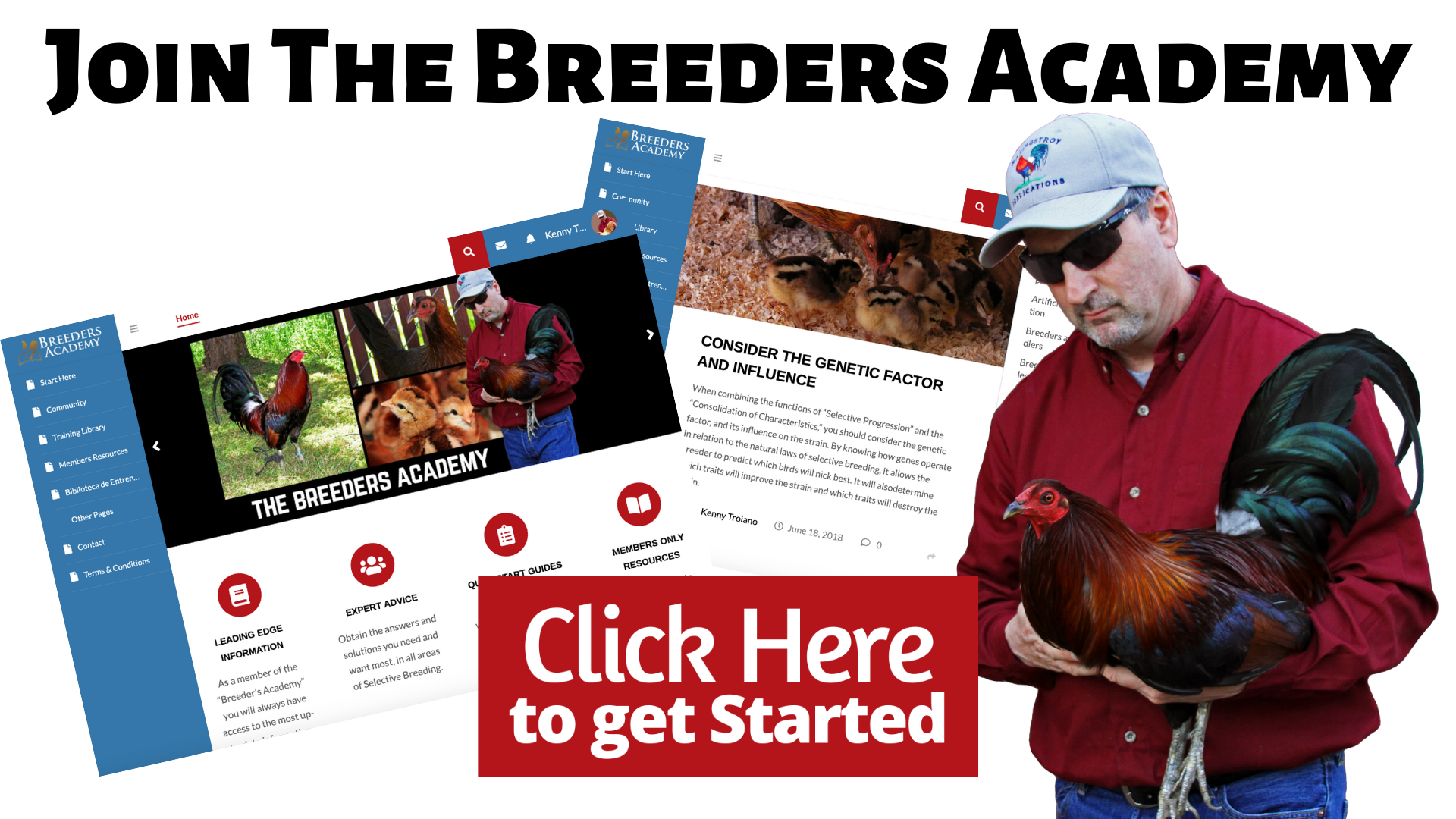
We also want to encourage you to join us at the Breeders Academy, where we will not only help you increase your knowledge of breeding and advance your skills as a breeder, but improve the quality and performance of your fowl.
The Science and Art of Breeding: Creating Bloodlines and Strains for Future Generations
Introduction
Breeding chickens and gamefowl is both an art and a science, steeped in tradition and driven by meticulous selection processes. Whether you’re a seasoned breeder or a newcomer to breeding, understanding the intricate balance between natural evolutionary mechanisms and selective breeding techniques can elevate your breeding program significantly. This article explores these concepts, providing insights into creating robust bloodlines and strains that can thrive in future generations.
The Foundation of Selection
Kenny Troiano, emphasizes the importance of grasping both natural and artificial selection processes. By understanding factors like natural selection, genetic drift, and gene flow, breeders can strategically improve their strains. The evolutionary mechanisms that nature employs, such as differential survival and reproduction, offer crucial lessons. In essence, successful breeders emulate these natural processes, but with more precision and at an accelerated pace.
Essential Factors in Breeding
In any breeding program, the selection of breeding stock forms the cornerstone. This involves selecting birds based on phenotype, the observable traits such as type, confirmation, station, and temperament. An ideal breeder focuses on pairing birds with minimal contrasting characteristics and free from defects to ensure the offspring exhibit the desired traits.
Role of Genetic Drift and Epigenetics
Genetic drift plays a vital role in shaping family lines. When breeders take a small genetic sample from a larger pool, illustrated by selecting a trio from a larger flock, they can create a family line with characteristics distinct from the original flock. This phenomenon, coupled with epigenetic factors, traits influenced by environmental changes, can guide breeders to harness and stabilize positive traits while eliminating negative ones over generations.
The Pillars of Evolutionary Selection in Breeding
This episode builds on the previous discussion on selection factors, exploring the evolutionary aspects such as:
- Natural and Artificial Selection: The hosts draw parallels between Mother Nature’s selection processes and artificial breeding practices, asserting that understanding and emulating these can significantly enhance strain quality.
- Genetic Drift: A pivotal theme, genetic drift refers to changes in the gene pool of a small population, which can lead to bigger and sometimes unexpected progress compared to larger, less selective gene pools.
- Environmental and Epigenetic Factors: The episode delves into how environmental changes and epigenetic phenomena can lead to significant shifts in traits, highlighting the importance of selection in guiding these changes for better or worse.
The Role of Hybrid Vigor and Inbreeding
A focal point in the episode is the relationship between hybrid vigor and inbreeding. The hosts discuss the misconceptions surrounding hybrid vigor, emphasizing its temporary nature and the importance of starting new strains through a foundational program for true genetic improvement.
Avoiding the Pitfalls of Outcrossing
A common misconception among breeders is the notion of “refreshing” bloodlines by introducing new blood. This practice, known as gene flow in the wild, often disrupts the stability of a strain, bringing in new, possibly undesirable traits. Instead, maintaining closed and controlled breeding within a family offers more consistent results over time.
Harnessing Hybrid Vigor
Hybrid vigor, or heterosis, is the improved or increased function of any biological quality in a hybrid offspring. It’s a powerful tool in breeding, but must be approached with an understanding of its limitations. Hybrid vigor provides a temporary boost in performance, but these gains are not passed down consistently. Breeders should understand that while hybrid vigor can offer immediate benefits, it doesn’t substitute for a well-structured breeding program aimed at developing consistent and pure family lines.
Inbreeding: An Often Misunderstood Tool
Inbreeding is often viewed with skepticism due to its potential to expose deleterious traits. However, when executed with knowledge and skill, inbreeding can help identify and eliminate recessive traits, gradually leading to a stronger genetic foundation. It is crucial for breeders to embrace inbreeding as a tool for purification, rather than fear it as a source of defects.
Breeder’s Decision: Finding the Right Balance
Whether you start by selecting the best cock or hen, each plays a critical role in breeding success. Experienced breeders like Frank Bradley and Kenny Troiano underscore the importance of focusing on high-quality breeding pairs as foundational stock. The choice between cock and hen should depend on the genetic goal and the availability of stock, with an emphasis on continuing offspring performance evaluation as the true measure of breeding success.
Crafting strong bloodlines and strains requires dedication, patience, and an understanding of genetic principles. By integrating evolutionary mechanisms and proper selection processes into your breeding program, you can achieve sustainable improvements and contribute to the legacy of great fowl. The journey may be challenging, but with these insights, breeders are well-prepared to pave the way for future generations of exceptional birds.
Conclusion: The Breeders’ Academy Advantage
In closing, the episode extends an invitation to join the Breeders’ Academy for deeper learning. The Academy offers comprehensive resources to help breeders develop top-quality strains. By gaining access to expert coaching and a treasure trove of materials, breeders can harness these insights to elevate their breeding programs.
Whether you’re new to breeding or a seasoned pro, the lessons from “Bred to Perfection” are invaluable for anyone aspiring to raise their breeding game. By understanding and applying the principles discussed, breeders can achieve not only personal satisfaction but also contribute to the betterment of breeding practices worldwide.